Category Archives: Professional Notes

Farnsworth Gives Lecture at Norwegian Washington Seminar

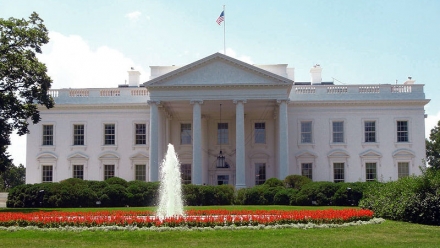
white house

Stephen Farnsworth, professor of political science and director of the University’s Center for Leadership and Media Studies, gave a lecture entitled “Is ‘House of Cards’ Really Fiction? U.S. Political Corruption, Voter Anger and the 2014 Elections,” at the Norwegian Washington Seminar in Washington, D.C., on Saturday, Nov. 1.

Farnsworth Gives DC Lecture on Foreign Policy

Farnsworth-The Global President

Stephen Farnsworth, professor of political science and director of the University’s Center for Leadership and Media Studies, gave a public lecture on “International Media, the U.S. Government and Foreign Policy Crises,” at the Ingleside at Rock Creek Forum in Washington, DC., earlier this month. The talk was drawn from his co-authored book, “The Global President: International Media and the U.S. Government.”

UMW Survey Receives Extensive Media Attention

Virginia Flag

A survey of Virginia voters designed by Stephen Farnsworth, professor of political science and director of the University’s Center for Leadership and Media Studies, has received extensive media attention, including reports in The Washington Post , Politico , Huffington Post, Daily Kos, Real Clear Politics, WUSA-TV, WJLA-TV, WRC-TV, WAMU-FM, The Richmond-Times Dispatch, The Daily Press of Hampton Roads and The Free Lance-Star.

James Monroe Museum to Host UMW Forum on Virginia Governors: Wed., Oct. 22

The James Monroe Museum and Library will host a public forum on Wednesday, Oct. 22 that focuses on the development of the role of Governor in Virginia since 1799. “From Monroe to McAuliffe: The Evolution of the Office of Governor of Virginia” will trace the history of the Virginia governorship and analyze the development of the office from the time James Monroe held the title to today.

Gerald_L_BalilesThe forum features a panel of experts, including  The Honorable Gerald Baliles, 65th  governor of Virginia; Stephen J. Farnsworth, UMW professor of political science and international affairs and director of the UMW Center for Leadership and Media Studies; Daniel Preston, editor of the Papers of James Monroe; and Scott Harris, director of the James Monroe Museum.

The event will be held at the University of Mary Washington in Lee Hall, Room 411 at 7 p.m. The forum is free and open to the public. Contact the James Monroe Museum and Library at (540) 654-1043 for more information.

UMW Survey Shows Support for McDonnell Prison Term

Sixty percent of Virginians said that former Gov. Bob McDonnell should be sentenced to prison for his role in a corruption scandal, according to a new survey sponsored by the University of Mary Washington’s Center for Leadership and Media Studies.

McDonnell

Former Governor Bob McDonnell

Only 28 percent of the 1,000 state residents surveyed Oct. 1 through Oct. 6 said that the former governor, who was convicted over his financial dealings with Jonnie Williams and Star Scientific, should not be jailed. Another 12 percent said they did not know or declined to answer. If those who did not express an opinion are excluded, then two-thirds of survey respondents believed the former governor should be sent to prison.

When asked how long the former governor should be jailed, only two percent of those who believed he should be sent to prison said that he should serve less than one year. A total of 46 percent of those who believed McDonnell should go to jail said the term should be between one and five years, while another 16 percent said the sentence should be between six and 10 years. An additional eight percent favored 11 to 25 years, three percent said more than 25 years and two percent said that the former governor should be in prison for the rest of his life.

“The strong public support for prison time demonstrates the extent to which the public is furious with ethical misconduct in Richmond,” said Stephen J. Farnsworth, professor of political science at UMW and director of the university’s Center for Leadership and Media Studies. “These results demonstrate the depth of voter anger with politicians who are thought to take better care of the well-connected than of ordinary citizens. Lawmakers ignore this resentment at their peril.”

A federal judge is expected to sentence the former governor in January.

Of those who expressed an opinion, 71 percent of women and 64 percent of men in the survey said the former governor should be sent to prison.

Among Republicans, 57 percent of those who expressed an opinion said McDonnell should go to jail, as compared to 70 percent of independents and 75 percent of Democrats.

A majority of voters in all sections of the state thought the former governor should be sent to prison. The lowest percentage among the state’s five regions was found in south central Virginia, where 59 percent of those expressing an opinion said the governor should go to jail. The South Central Virginia region includes Richmond.

The highest share of residents favoring prison time for the former governor was found in Northern Virginia where just over 75 percent who expressed an opinion said the governor should be put behind bars.

Latino Americans who expressed an opinion were more inclined than either African-Americans or whites to say that governor should be jailed, by a margin of 78 percent to 68 percent and 65 percent respectively.

Fifty one percent of respondents who identified themselves as part of the Tea Party movement believed the former governor should not go to jail, as compared to nearly 70 percent of those who did not identify with the movement. Nine percent of those surveyed said they considered themselves part of the Tea Party movement.

The survey was conducted on the UMW center’s behalf by Princeton Survey Research Associates International.

For the full survey, see the Topline.

Contact:  Stephen J. Farnsworth at (703) 380-3025 or sfarnswo@umw.edu

The Fall 2014 Virginia Survey, sponsored by University of Mary Washington (UMW), obtained telephone interviews with a representative sample of 1,000 adults living in Virginia. Telephone interviews were conducted by landline (500) and cell phone (500, including 247 without a landline phone). The survey was conducted by Princeton Survey Research Associates International (PSRAI). Interviews were done in English by Princeton Data Source from October 1 to 6, 2014. Statistical results are weighted to correct known demographic discrepancies. The margin of sampling error for the complete set of weighted data is ± 3.5 percentage points. 

UMW Survey Reveals Qualms about U.S. Ebola Preparedness

A majority of Virginians believe that the U.S. health system is unprepared to deal with an Ebola disease outbreak in this country, according to a new survey of state residents sponsored by the University of Mary Washington’s Center for Leadership and Media Studies.

iStock_000045684788LargeThirty percent of the 1,000 state residents surveyed Oct. 1 through Oct. 6 said that the government was very unprepared to handle an outbreak, while another 29 percent said the government was somewhat unprepared. Only 13 percent believed the government was very prepared, with another 22 percent saying the U.S. was somewhat prepared.

This year’s Ebola outbreak so far has killed more than 3,800 people in Africa, according to the World Health Organization. On Wednesday, Thomas Eric Duncan became the first person to die in the U.S. of Ebola, which he acquired before leaving Liberia for a visit to Texas.

These results were part of a broad pattern of negative evaluations of the U.S. government by Virginians. Only 28 percent of those surveyed said the U.S. was generally headed in the right direction, with 59 percent saying that things were headed in the wrong direction. Only 15 percent of those surveyed approved of the job Congress was doing, and only 43 percent approved of President Obama’s performance in office.

The margin of sampling error is plus or minus 3.5 percentage points for the complete survey sample.

“If things get worse with Ebola in this country, the public’s negativity about the federal government may be a key factor standing in the way of believing federal authorities,” said  Stephen Farnsworth, professor of political science at UMW and director of the university’s Center for Leadership and Media Studies. “Gridlock, deep partisanship and continuing negative economic evaluations combine to create a populace inclined to doubt the federal government.”
With respect to other policy questions, support for the legalization of gay marriage in Virginia stood at 50 percent, as compared to 42 percent opposed, with the rest undecided or unwilling to answer the question.

In a March 2013 UMW survey, 45 percent favored gay marriage and 46 percent opposed. This month’s survey was conducted before the Supreme Court’s decision Monday to leave in place a federal appeals court ruling that cleared the way for gay couples to marry in the Old Dominion.

In 2006, the commonwealth’s voters approved an amendment to the Virginia Constitution to ban gay marriage by a 57 percent to 43 percent margin, a sharp contrast from the results of the 2013 and 2014 surveys of state residents.

“Rarely does public opinion shift on a social issue as rapidly as it has for gay marriage,” Farnsworth said. “While opposition to gay marriage remains substantial, the rapid erosion of that disapproval among Virginians in the years since the 2006 constitutional amendment is astonishing.”

The survey, which was conducted on the center’s behalf by Princeton Survey Research Associates International, also found significant support for Virginia Gov. Terry McAuliffe’s proposal to expand Medicaid for uninsured state residents. The Medicaid expansion plan has been rejected repeatedly by the state legislature, but was supported by a 64 percent to 29 percent margin of state residents in the survey.

In a September 2013 UMW survey, 59 percent supported Medicaid expansion while 31 percent opposed it.

“The governor’s full court press for Medicaid expansion may have moved public opinion slightly, but support for Medicaid expansion was substantial before the start of his term,” Farnsworth said. “What is particularly clear from this survey is that the legislators have not been successful in convincing Virginians that Medicaid expansion is a bad policy idea.”

Overall, 44 percent approve of the governor’s performance in office, as compared to 31 percent who disapprove. In March 2013, shortly before news of former Gov. Bob McDonnell’s corruption scandal emerged, support for the former governor was somewhat higher, with 53 percent supporting the Republican and 27 percent disapproving of his performance in office.

The current governor remains more popular than members of the Virginia legislature, with 45 percent disapproving of the performance of the House of Delegates and the Senate, while 41 percent approve.

For the full survey, see the Topline.

Contact:  Stephen J. Farnsworth at (703) 380-3025) or sfarnswo@umw.edu

The Fall 2014 Virginia Survey, sponsored by University of Mary Washington (UMW), obtained telephone interviews with a representative sample of 1,000 adults living in Virginia. Telephone interviews were conducted by landline (500) and cell phone (500, including 247 without a landline phone). The survey was conducted by Princeton Survey Research Associates International (PSRAI). Interviews were done in English by Princeton Data Source from October 1 to 6, 2014. Statistical results are weighted to correct known demographic discrepancies. The margin of sampling error for the complete set of weighted data is ± 3.5 percentage points.